Community Partner Profile: Somali Community Services

Somali Community Services of Seattle hosted the first of three workshops on September 6 to share information about voting in King County with members of the East African communities.
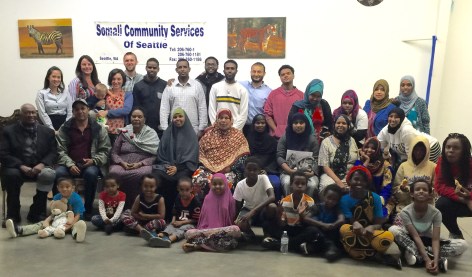
somali-community-services
The event began with a celebration of Somali food and dances from the center’s youth group. There was a presentation about the history of voting rights in America, the need for community engagement in the electoral process, and a look forward to some of the candidates and measures on the upcoming ballot.

All the information was interpreted in Amharic, Oromo, Somali, and Tigrinya. Guest speakers included King County Election’s Director Julie Wise and Cherry Cayabyab, President of the Seattle/King County NAACP Gerald Hankerson, and numerous community members who all encouraged the attendees to spread the word with others about the importance of voting.

Small group discussions were held to give participants an opportunity to reflect on what they had just learned and strategize about how to get more people involved leading up to the November 8 General Election. By the end of the night, more than 20 people at the event had registered to vote!

The group’s next workshop will take place on October 4 from 5:30-7:30 pm at Yesler Community Center and people will have the opportunity to learn specifics about the issues they will see on the November ballot.

Election Systems in the Headlines

computer security

There’s been a lot of buzz lately about the security of our nation’s election systems – from the cyber attacks on Arizona and Illinois – to political rhetoric about election rigging – to the Department of Homeland Security considering a “critical infrastructure” designation for election systems.

So, you might be wondering, how safe are King County’s election systems? And the answer is, pretty darn safe. There are a couple of reasons for this:

  • We maintain our own voter registration system. Yes, it talks to the state’s, but they are completely independent from each other. Every day we are looking at what’s coming in (additions, deletions or changes to voter registration records) and would immediately notice any voter registration activity that is out-of-the-ordinary. We also continuously maintain a back-up so that if we do spot something unusual, we are able to fix the problem without disruption.
  • The voter registration database has absolutely nothing to do with counting ballots. Our tabulation system is on a closed network that is not connected to the outside world. To breach it, one would have to be inside the building and we have all sorts of security protocols – from 24-hour live-streamed surveillance to biometric access – that keep our equipment secure.

So, while we need to stay vigilant, we’ve got great processes and systems in place. So you can vote with confidence!

Voters use drop boxes in record numbers

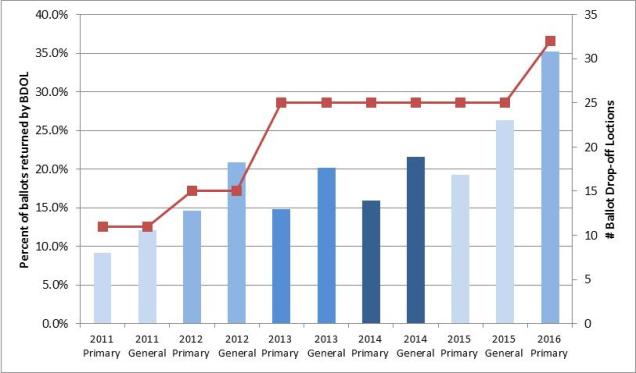
The numbers are in and drop box usage was off-the-charts for the August 2 Primary! As you may remember, we added a bunch of new drop boxes for this election, with 14 more coming for November.

Some of the more noteworthy statistics include:

  • Nearly 36% of ballots were returned via drop-box. This is more than any election in recent history. Previously the highest percentage of ballots returned via drop-box was the 2015 General Election with 26.3%.

Percent of ballots returned by drop box

  • More than 100,000 ballots were returned to drop boxes just on Election Day. That’s nearly 20,000 more than we’ve ever had returned in a single day.
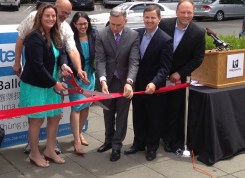
  • The new Lake City Library box – which was officially unveiled by Councilmember Rod Dembowski, King County Executive Dow Constantine, and GroupRibbonCutting_flipElection’s Director Julie Wise – saw more than 6,500 ballots returned – more than several other permanent locations that have been available for years.

And the even better news is that there are more on the way! For the General Election this November 8, there will be 43 ballot drop-off locations across the county.

What if there’s a tie?

hand flipping coinMany races are decided by thousands, even tens or hundreds of thousands, of votes. But others are much closer. What happens, you may have wondered, if there’s a tie?

First, there’s a recount – just to make sure the vote totals are correct. Second, candidates are notified of the date and time on which the winner will be determined. Finally, the winner is determined by “lot,” which basically means by a random method determined by the election authority. Typically, a coin toss is used, but theoretically any method could be employed, so long as
it’s random. Rock, paper, scissors anyone?

While this is incredibly rare for most offices, when Precinct Committee Officers (PCOs) are on the ballot, it’s actually fairly common because the vote tallies are so low. This year there are 160 PCO races in King County. Happy coin flipping everyone!