Record-Setting 1 Million Votes Cast in General Election

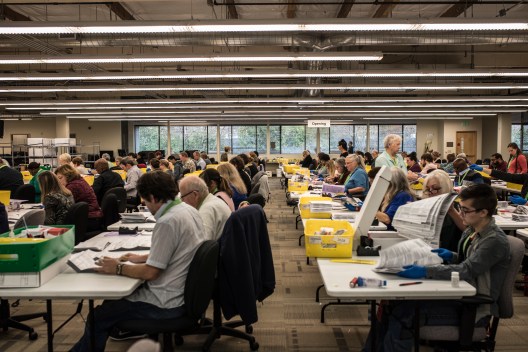
More King County voters cast a ballot than ever before in the 2016 General Election: 1,054,564. This is the first time in history that King County Elections received and processed more than 1 million ballots. In 2012, 993,908 ballots were returned and 978,377 processed.
kce_day_1_20161017-101

So what caused the increase in ballots cast? Was it more voter turnout? Not exactly. We add about 100,000 new registered voters each year. And over the last year, we canceled the registration of about 58,000 voters, mostly people who have moved away from the county.

kce_bb_20161107-145

The boost in new registered voters is largely due to the county’s steady population growth. King County’s population grew from about 1.5 million residents in 1990 to over 2 million in 2015, an increase of 36%. The county’s growth rate is faster than the overall U.S. population growth of 29% from 1990 to 2015. King County’s population growth over the years reflects a national trend of people moving to cities. Seattle, Bellevue, Kent and Renton saw their populations increase over the last decade.

kce_bb_20161107-243We did not, however, set a record for voter turnout. Of the county’s estimated 1.28 million registered voters, about 82% cast a ballot. Voter turnout was 85% in 2012.
Drop Boxes with the Most Ballot Returns

voter-at-drop-box

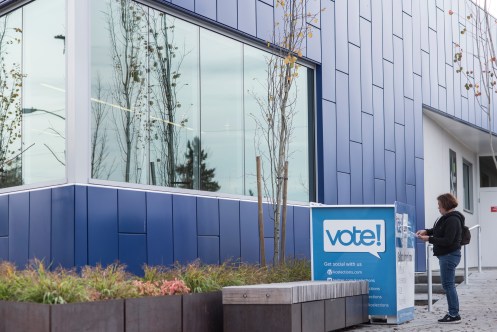
At King County Elections, we’re all about making the voting process easier and more convenient. That’s why we rolled out 33 new ballot drop boxes in time for the General Election. About 91% of county residents now live within 3 miles of a drop box. And you know what? The extra coverage paid off. More than half (51.4%)  of all returned ballots were brought to a drop box!

That got us thinking: which drop boxes had the highest ballot returns? Out of the 43 total drop boxes, here are the top 20.

1. Ballard Branch Library: 39,282
2. King County Elections Building: 31,896
3. Crossroads Shopping Center: 24,332
4. Redmond City Hall: 23,317
5. King County Administration Building: 22,602
6. Federal Way City Hall: 22,289
7. Burien City Hall: 19,630
8. University of Washington Campus – Schmitz Hall: 18,985
9. Bellevue Regional Library: 18,559
10. Issaquah City Hall: 17,631
11. Shoreline Library: 16,949
12. Seattle Central College – Broadway-Edison Building: 16,396
13. Lake City Library: 15,435
14. Lake Forest Park City Hall: 14,619
15. High Point Library: 14,614
16. Regional Justice Center: 14,373
17. Green Lake Community Center: 13,691
18. Covington Library: 13,539
19. Sammamish City Hall: 13,371
20. Fairwood Library: 12,535

What Can We Learn From Voter Registration Cards?

When Washington became a state in 1889, state law established that each registered voter would receive a certification containing the following information:

historic-voter-reg-card

Early voter registration cards established where a citizen lived and voted. The voter registration card you receive in the mail today provides similar information, but we’ve had some updates roll out in the meantime. Can you spot the differences?

voter-reg-card

  • Today’s voter registration cards have your voter ID number. Your voter ID number is unique to you and allows us to easily locate your voter registration file anytime you have questions or need to update your voter information.
  • In addition to your precinct, your voter card also displays congressional, legislative, county council and city council districts.
  • Notice the reference to “he” in line 7. According to the Washington Secretary of State’s office, “in 1854, Washington nearly became the first state to grant women’s suffrage, but the proposal was defeated by a single vote.” It wasn’t until 1910 that Washington state amended its Constitution to grant women the right to vote, 10 years before the rest of the country!

Now that Washington is a vote-by-mail state, why do we need a voter registration card?
Your voter registration card serves not only as an acknowledgement of your registration but also gives you the opportunity to ensure that your name and address are correct. This is important because your address determines what measures and candidate races are on your ballot!

To learn more, check out The History of Elections and Voting in Washington.

Meet the Canvassing Board

The King County Canvassing Board is a public entity that conducts a formal assessment of the election. The assessment includes reviewing vote totals, determining the validity of challenged ballots, certifying the vote and administering a recount.

Canvassing Board meetings take place at the King County Elections office in Renton. All meetings are public. State law mandates that the county auditor – or commensurate official – serve as the Canvassing Board chair. Other members are the county prosecuting attorney and the chair of the county legislative body. Let’s meet the board!

Julie Wise
Director of King County Elections
Julie Wise started as a temporary King County Elections employee in 2000 when she fell in love with the voting process. She served as the Deputy Director of Elections before being elected Director in November 2015. Wise is a Washington State certified Election Administrator and is a nationally Certified Election Registration Administrator.

Kevin Wright
Prosecuting Attorney’s Office Designee
Kevin is the Chief Civil Deputy Prosecuting Attorney for King County. Kevin manages civil legal matters for the county and oversees 55 prosecutors. He has served on the Canvassing Board since 2008. Kevin earned a Juris Doctor degree from the University Of Washington School Of Law and a bachelor’s degree from Western Washington University.

Carolyn Busch
King County Council Representative
Carolyn is the Chief of Staff for the King County Council. She has a 25-year-long career in public policy that includes working for the state Senate Democratic Caucus and advising Governors Booth Gardner and Gary Locke on K-12 and higher education policy. Carolyn holds a bachelor’s degree in political science and a master’s degree in Public Administration from the University of Washington.

Canvassing Board meetings are open to the public, so stop by! View the Canvassing Board schedule to see when the board meets next.

Election Day is Over…Now What?

voter-blue

Well folks, after a whirlwind lead-up, Election Day is over. So, what now? Here are a few things you should know:

  1. We are still processing ballots! To date, we have received more than 1 million ballots out of an issued 1.28 million. That’s more than an 80 percent turnout, so great job King County voters!
  1. You can track your ballot with our Ballot Tracker. Plug in your information to see if we have received and counted your ballot.
  1. If you forgot to sign your ballot envelope or we challenge your signature, we will notify you to provide us with an updated signature and your vote will be counted. You have until November 28th to do this, but it would be great if you could get back to us as soon as possible.

kce_bb_20161107-231.jpg

  1. We are regularly updating election results here. However, our results won’t be official until we certify the election on November 29. We process every eligible ballot for every race until we share final results on November 29.
  1. Questions about your ballot or the election? Our phone bank is open. Give us a call at 206-296-VOTE (8683).

4 Things You Need to Know About Write-In Candidates in a General Election

This election has seen a lot of public discourse about write-in candidates. But before you scribble in your candidate of choice, here are four things you should know:

  1. We count the total number of write-in votes for each office in an election. However, we don’t count how many votes each write-in candidate receives unless one of two things happens: a) For single-candidate races: the total number of write-in votes are more than the votes cast for the single printed candidate on the ballot for the same position or b) For multi-candidate races: the total number of write-in votes is more than the difference between the top candidates. In that case, we tabulate how many votes each write-in candidate receives for that office.
  1. While it is a voter’s right to write in a candidate of their choice, we recommend that you pick a real person and not a fictional character such as Mickey Mouse. Processing ballots with write-ins for imaginary candidates takes our staff extra time and costs money.

write-in

  1. Write-in candidates in King County have won in smaller races before. A write-in candidate unseated the incumbent during the 2011 mayor’s race in the City of Pacific.
  1. There are two kinds of write-in candidates: undeclared and declared. A declared candidate files as a write-in but their name will not appear on the ballot. However, every variation of their name that is written in will be counted as a vote. So if voters write in John Smith or Jon Smyth, both spellings would count as a vote. An undeclared candidate is one that has not filed and is promoting their candidacy on their own. Their name, however, must be written as the exact spelling. No variations of their name will be counted as a vote.

If you have any questions about write-in candidates, give us a call at 206-296-VOTE.

Ballot Envelope Colors Explained

blue-envelope
Blue Inbound Envelope

We’ve been getting some questions about why we color code our envelopes. Are the blue envelopes for Democratic voters? Are the red ones for Republican voters? What’s up with the green envelopes? Let us explain.

red-envelope
Red Return Envelope

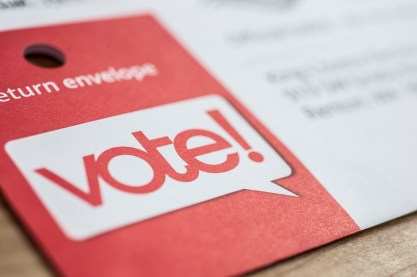
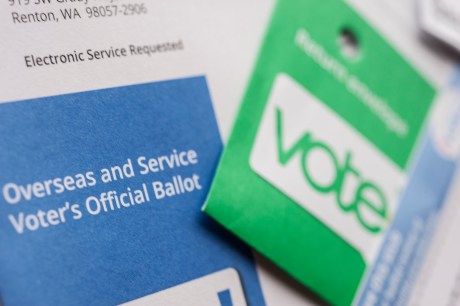
Our envelope colors have nothing to do with politics (Washington voters don’t register with a party, anyway) but actually have to do with helping us and the U.S. Postal Service distinguish inbound and outbound ballots. All of the ballots we send to voters are mailed in our signature blue envelopes. The envelope you use to return your ballot is red. This helps our office and the Postal Service distinguish your red envelope as a returned ballot. And finally, the green envelopes are used by overseas and service voters to return their ballots.

green-ballot
Green Overseas and Service Voter’s Return Envelope

That’s it! If you have any questions give us a call at 206-296-VOTE (8683).

Pro-tip – Get Your Ballot in Early!

One thing many people don’t realize is that their voting record is public information. That means anyone can request access to your voting history. However, the candidates or measures you voted for are not public information. In fact, not even we know how you voted since your identity, once we have verified your signature, is separated from your ballot. Nor do we ever provide your phone number or email address. And, particularly during high-profile elections, campaigns are regularly checking whether or not you’ve returned your ballot. They can then use that information to focus their “get out the vote” efforts on voters who have yet to return their ballot.

So what does this mean? While we can’t promise anything, it definitely stands to reason that once you’ve returned your ballot you may get fewer calls and mailers. Additionally, the more ballots we receive early, the more ballots we can report on election night. Therefore you have multiple incentives to get your ballot in early.

The good news is that many of you already have – our returns so far are 30% higher than what we projected – so keep it up!

Voter Registration Deadline is October 31

King County residents not currently registered in Washington State still have until October 31st to come by in person and complete their voter registration.

Feeling crunched for time? We can help!

The King County Elections Office has extended office hours and is operating:

  • Thursday, October 27, 8:30 a.m. – 6 p.m.
  • Friday, October 28, 8:30 a.m. – 6 p.m.
  • Saturday, October 29, 9 a.m. – 3 p.m.
  • Monday, October 31, 8:30 a.m. – 6 p.m.

The Voter Registration Annex in downtown Seattle is open Monday – Friday, October 24 – 31, from 8:30 a.m. – 4:30 p.m.

Procrastinators beware: although the King County Elections Office will be open until 6 p.m. on Monday October 31, we expect to have lines. Don’t wait until the last minute to get registered to vote!

Voting Options for All

Updated 2/6/2018

Whether you enjoy the morning sitting at your kitchen table with your coffee and ballot, or insist on going in person to vote, King County gives you options. Find the way that works best for you!

AVC New
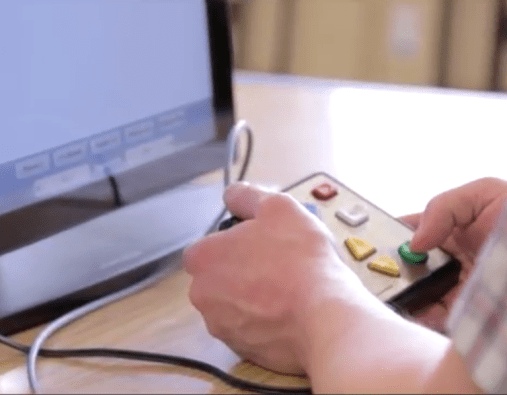
An Accessible Voting Unit

Voters can use our Online  Ballot Marking Program to print out their ballot and return envelope. Ballots received in the mail or printed out can be marked and returned via USPS mail or to one of our ballot drop boxes throughout King County.

Continue reading